Media expert Antony Young rounds up media news from beyond Aotearoa in a regular column for StopPress.
This week:
- A Reuters investigation has revealed that Facebook and Instagram are running 15 billion scam ads each day.
- Andrew Cuomo’s AI-generated ads made him appear out of touch compared to Zohran Mamdani’s people-first campaign.
- Micro dramas have become a fast-growing global entertainment format.
- The Australian Government will introduce legislation requiring major streaming services to produce and air local content.
Facebook and Instagram running 15 billion scam ads each day
A Reuters investigation has revealed internal Meta documents estimating that around 10% of Meta’s global annual revenue in scam ads or promotions for banned goods.
That equates US $ 16 billion in revenue, with the company serving an estimated 15 billion high-risk scam ads per day across Facebook and Instagram.
The documents suggest Meta is aware of the scale of the issue but often declines to take action unless its systems can detect a scam with 95% certainty, a standard that allows most fraudulent ads to bypass its filters.
Users who interact with one scam ad are reportedly shown more due to Meta’s ad-personalisation algorithm. Beyond the ethical concerns, advertisers and media buyers will be aware this also means scam advertisers are inflating auction demand, driving up ad costs.
Meta denies the claims and says scam reports have dropped 58% in 2025 due to improved detection, but regulators are expected to investigate further.
Global scam losses now exceed US $ 1 trillion annually, affecting 23% of adults worldwide. If proven true, Meta could face major fines unless, as critics note, the penalties end up being smaller than the revenue Meta earns from the scams.
Mamdani’s winning campaign shows up AI
Andrew Cuomo’s failed bid for New York City mayor is a cautionary tale for AI, producing tone-deaf deepfakes and bizarre AI-generated campaign ads that made him look out of touch.
While his opponent Zohran Mamdani ran a grassroots, people-first campaign with real street presence.

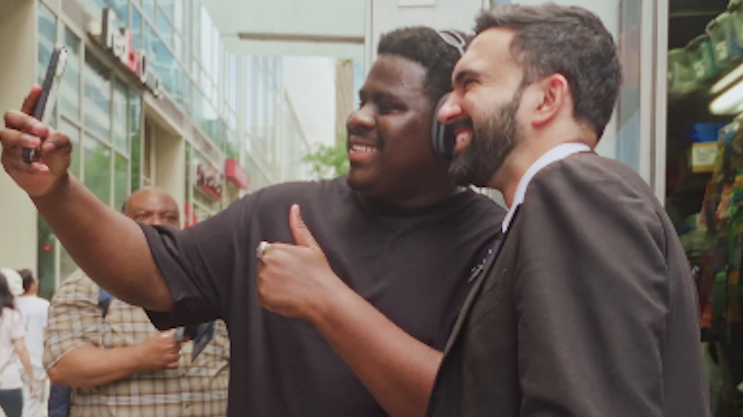
Mamdani’s YouTube messaging and TikTok content resonated with New Yorkers as he zeroed in on policies to deal with the cost of living crisis.
Cuomo countered with a series of uncanny AI videos featuring a digital version of himself doing “regular New Yorker jobs” like driving the subway or washing skyscraper windows, a gimmick that only reinforced how disconnected he was from everyday voters.

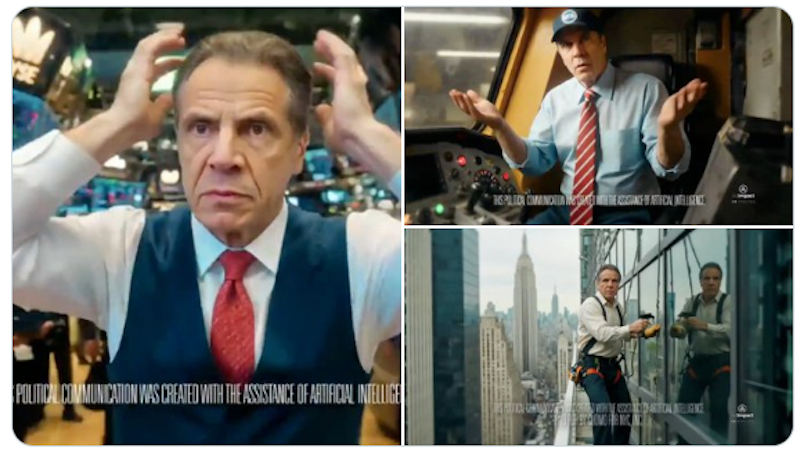
Worse still, the campaign’s AI tactics escalated from cringe to weird.
On Halloween, Andrew Cuomo’s campaign released an AI-generated ad portraying Zohran Mamdani as a Scooby-Doo-style villain who unmasks to reveal Republican mayoral candidate Curtis Sliwa. Meanwhile, the real Mamdani trick-or-treating with voters in person perfectly captured the campaign’s contrast: one candidate hiding behind artificial imagery, the other showing up in real life.
In the end, Cuomo’s reliance on AI didn’t modernise his campaign; it exposed just how outdated he had become.
Watch out Netflix, micro dramas could threaten
Short-form “micro dramas,” mobile-first, vertically shot shows that run just 2-3 minutes per episode have become a fast-growing global entertainment format, generating an expected US $ 11 billion in revenue in 2025.
Driven largely by China (83%) and followed by the US (8.6%), the format doubled its international revenue year-on-year, reaching US $ 800 million in Q3 2025 alone.
Micro dramas earn revenue primarily as a freemium model where users pay for content beyond a few free episodes, but also sell in-app ads and integrate in-story sponsorship.
It is on track to out-earn FAST (free ad-supported streaming TV) channels by nearly 2x next year. 68% of US ad spend coming from Facebook, TikTok, Snapchat and Instagram, reflecting how the dramas’ short, cliffhanger-driven stories are engineered for social sharing and virality.
While nearly half of viewers are aged 18-34, the format is spreading across demographics, with 23% of viewers aged 35-44, showing micro dramas aren’t just a Gen Z trend but a mainstream emerging form of ‘television.’
Australia to insist streaming services comply with local content quotas
The Australian Government is set to introduce new legislation requiring major streaming services such as Netflix, Disney+, Amazon Prime Video and others to be forced to produce and air local content.
If passed, streaming platforms with over one million Australian subscribers will need to invest either 10% of their local content spend or 7.5% of their Australian revenue into producing Australian drama, children’s, documentary, arts or educational programming.
The move, part of the government’s Revive National Cultural Policy, is designed to “level the playing field” with free-to-air broadcasters, who have long been subject to local content quotas, and could guarantee at least $ 372 million a year in new funding for the Australian screen industry.
While streamers already report local spending to ACMA voluntarily, this would make those commitments mandatory, with Netflix alone estimated to owe around $ 100-125 million annually depending on whether revenue or expenditure is used as the metric.
The industry groups and networks have welcomed the reform as overdue. I hate to say this, but the Aussies have got this right.
The post Around the World: Watch out Netflix, micro dramas could threaten appeared first on stoppress.co.nz.